

Culturally Significant Entities
First Nations leadership in biodiversity management
Jagun Alliance contributed to National Environmental Science Program research led by Curtin University to develop in depth case studies of Culturally Significant Entities (CSE). These are species and ecological communities that hold deep Cultural importance to First Nations peoples. The project works towards a future where First Nations knowledge guides the care and management of Country.
What is the Culturally Significant Entities project?
Culturally Significant Entities (CSE) are species and ecological communities that are Culturally important to First Nations people, and are critical to their relationship with and adaptation to Country (land, water, sea and sky).
Previously, there was no national definition of a culturally significant entity, and CSE are not considered by policy makers in the same way that other entities, such as threatened species, are considered. This National Environmental Science Program project, led by Curtin University through the Resilient Landscapes Hub, highlighted the importance of collaborative and First Nations-led management of CSE in biodiversity conservation and natural resource management.
Jagun Alliance contributed to this project by co-developing detailed case study profiles for priority species on Bundjalung Country, including the Nguruny (Coastal Emu), Jahrany (Culturally significant frog species), and the Bugam (Black Bean tree). These profiles documented Cultural knowledge, ecological values, threats, and Bundjalung-led management approaches to support improved outcomes for both Country and community.
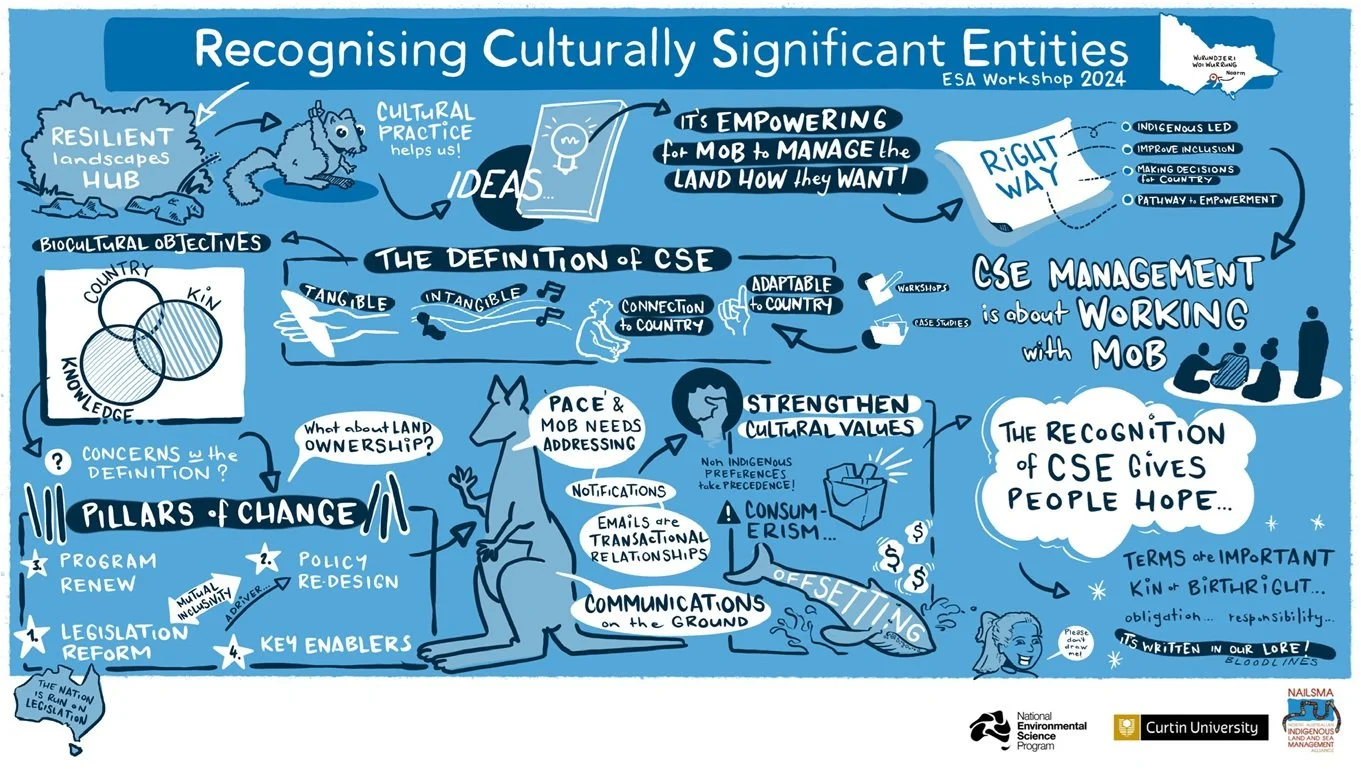
A graphic scribe from a Culturally Significant Entities workshop. Source: Culturally Significant Entities summary report.
Key activities
As part of this National Environmental Science Program research project, Jagun Alliance worked with Bundjalung Knowledge Holders to develop in-depth case studies that can inform policy development, planning and assessment.
Case study development: Co-developed detailed CSE profile templates for the Coastal Emu, frog species and Black Bean tree in partnership with Bundjalung Knowledge Holders.
Knowledge documentation: Worked with Elders and community members to document Cultural values, stories and traditional management practices associated with each species.
Research collaboration: Contributed to a national research effort led by Curtin University, bringing place-based Bundjalung knowledge to inform policy and legislative reform for CSE recognition.
Knowledge protection: Safeguarded First Nations Cultural and Intellectual Property (ICIP) through strict data governance protocols, ensuring knowledge is stored and managed by the Bundjalung community.

What are Culturally Significant Entities?
Culturally Significant Entities are species and ecological communities that have Cultural value to First Nations people and are critical to their relationship with and adaptation to Country (land, water, sea and sky).
CSE may include:
Species that are spiritually or culturally important in creation stories, songlines, cultural pathways or trading routes
Ecological communities that encompass elements such as wind, soil and fire
Totems for Nations, tribes, groups, families or individuals
Sources of food or medicine
Materials for tools or implements used in customary activities and traditional practice
Indicators of the health of Country
Species used for ceremonial activities
The wellbeing of First Nations peoples is inherently linked to CSE, and consequently to the condition of Country, Kin and Knowledge. The sustainable management of CSE led by First Nations peoples is fundamentally important to maintaining Culture, traditional practice, language and Knowledge Systems.
Bundjalung case study species
The project developed comprehensive profiles for three priority Culturally significant entities.

Bugam pods and beans. Photo: Renae-stock.adobe.com
Bugam (Black Bean tree)
The Bugam (Black Bean tree) is a Culturally important rainforest species with deep connections to Bundjalung, Githabul and Yugambeh peoples. Recent research has shown Bundjalung groups spread this tree across Country along traditional Dreaming tracks thousands of years ago.
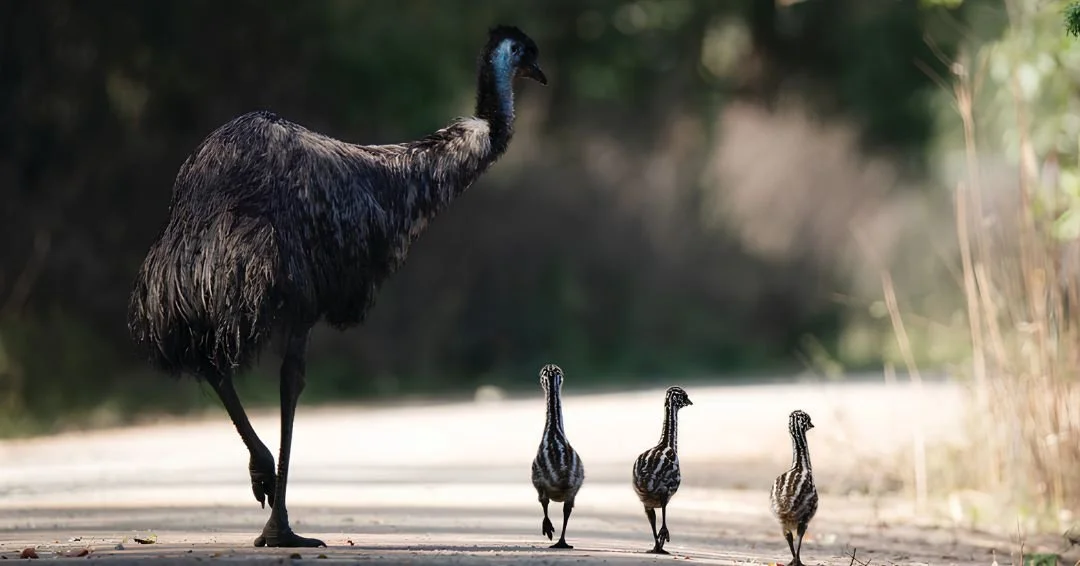
Male nguruny with chicks. Photo: Elise Derwin
Nguruny (Coastal Emu)
Known as Nguruny in Bundjalung language, the Coastal Emu is of significant cultural value to Bundjalung, Gumbaynggirr and Yaegl peoples. With fewer than 50 individuals remaining, this genetically distinct population is critically endangered and in urgent need of collaborative conservation action.
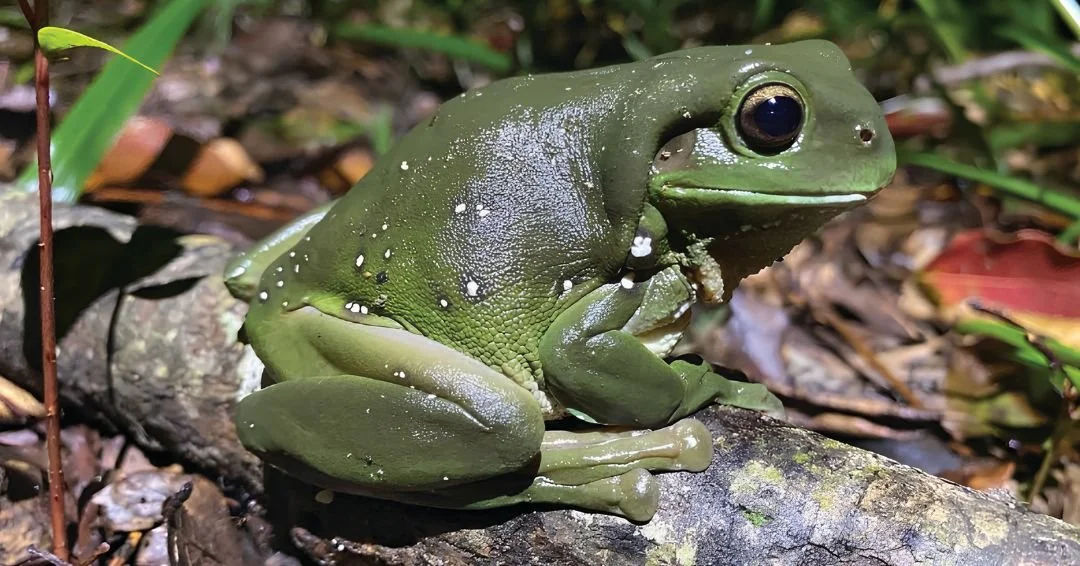
Green tree frog (Litoria caerulea). Photo: Michele Lockwood
Jahrany (Frog species)
Frogs hold important cultural significance across Bundjalung Country, serving as indicators of healthy waterways and wetlands. This case study documents Cultural knowledge and management approaches for priority frog species identified by the Bundjalung community.
Why is this project important?
The recognition of species and ecological communities of Cultural significance to First Nations peoples presents a key opportunity to value First Nations Knowledge and integrate traditional management practices into land and sea management. This will empower First Nations peoples to lead the decision-making that informs conservation and strategic land-use planning.
The wellbeing of First Nations peoples is inherently linked to CSE and consequently to the condition of Country, Kin and Knowledge. The sustainable management of CSE led by First Nations peoples is fundamentally important to maintaining Culture, traditional practice, language and Knowledge Systems.
By contributing Bundjalung case studies to this national project, Jagun Alliance helped build a body of evidence that supports the recognition of CSE as a new category of environmental significance.
Respecting Cultural Protocols
This project was committed to respecting First Nations Cultural and Intellectual Property Rights (ICIP). All cultural knowledge and data shared during the project were protected under strict protocols developed with the Bundjalung community.
Participation was entirely voluntary, and consent was obtained following the principles of Free Prior and Informed Consent. All information shared was kept confidential, and participants had the right to withdraw their knowledge at any time. A data sharing agreement ensured all data is stored and managed by Jagun Alliance and the Bundjalung community.
This project is supported with funding from the Australian Government under the National Environmental Science Program.